
Employer Guide · Vibration Regulations 2005
HAVS Health Surveillance: the 5 tiers explained
Hand-arm vibration syndrome is permanent and preventable, and the HSE’s five-tier surveillance model is how you catch it early. Here’s what each tier involves, who’s allowed to run it, and when a worker moves up a tier.
When surveillance is required
Under the Control of Vibration at Work Regulations 2005, Health Surveillance is required for workers regularly exposed above the exposure action value, and the exposure limit value must not be exceeded at all.
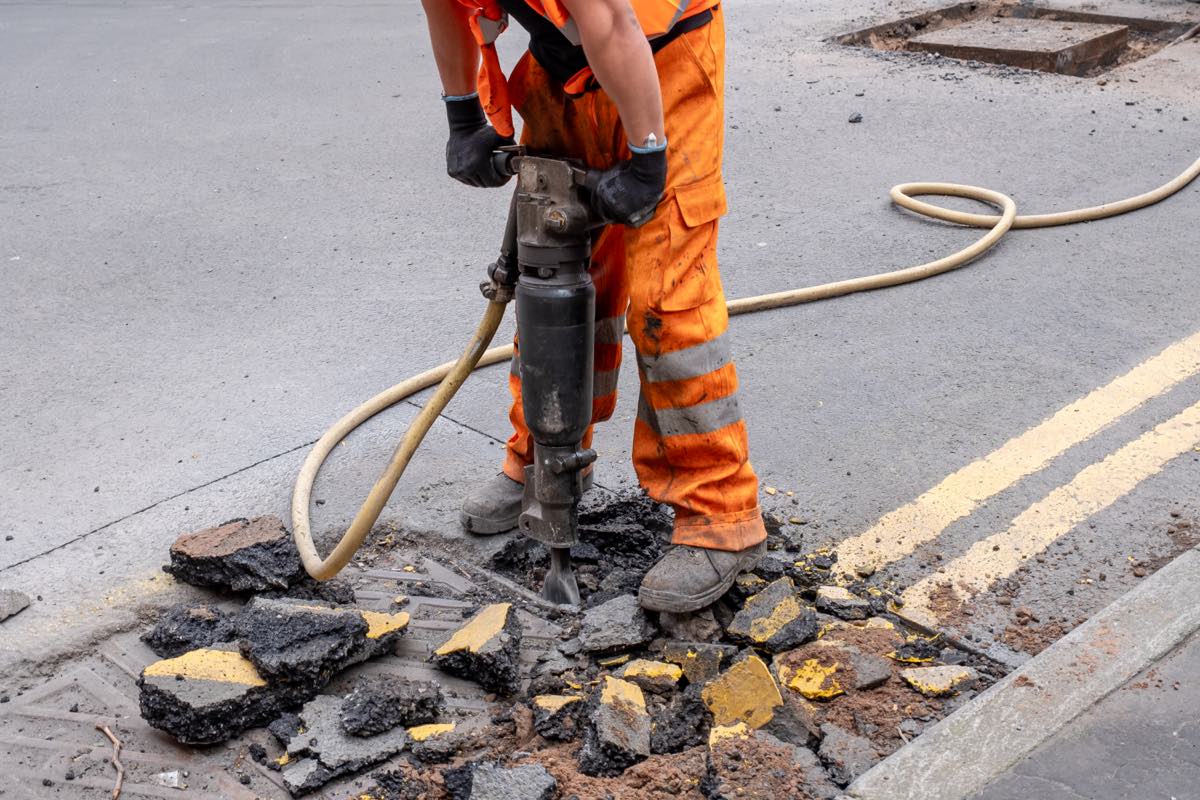
Breakers, grinders, chainsaws, impact wrenches, strimmers and compactor plates all reach the action value faster than most employers expect.
Health Surveillance is required above this. Roughly two hours on a typical grinder, or 15 minutes on a heavy breaker.
Must not be exceeded at all, whatever controls are in place.
The five tiers
| Tier | What happens | Who can run it |
|---|---|---|
| Tier 1 — Baseline questionnaire | New starters likely to be exposed complete a short symptom and history questionnaire before exposure begins | A trained “responsible person” in your business |
| Tier 2 — Annual questionnaire | Yearly screening questionnaire for every exposed worker | A trained responsible person |
| Tier 3 — Clinical assessment | Triggered by any symptoms reported at tier 1 or 2: a structured clinical interview and examination | Occupational Health nurse or Doctor |
| Tier 4 — Formal diagnosis | Where tier 3 finds relevant signs: diagnosis, staging, and fitness-for-work advice | Doctor qualified in Occupational Health |
| Tier 5 — Standardised testing (optional) | Objective vascular and neurological testing to support staging in complex cases | Specialist referral |
This guide is general information for employers in Great Britain, not legal advice. Reviewed by Dr Gillian Hawkley, Occupational Health Physician.
Common questions
At what vibration level is HAVS Health Surveillance required?
Health Surveillance is required for workers regularly exposed above the exposure action value (EAV) of 2.5 m/s² A(8), and for anyone with diagnosed HAVS who continues to work with vibrating tools. The exposure limit value of 5 m/s² A(8) must not be exceeded at all.
Does a HAVS diagnosis mean the worker has to stop work?
Usually not. The Doctor advises on fitness and restrictions — often reduced trigger time, tool changes or job rotation. Early-stage HAVS caught by surveillance is exactly the point: it lets you act before the condition progresses to the stage where work really is affected.
Related
Health Surveillance programmes
HAVS tiers delivered alongside audiometry, spirometry and skin checks.
Our serviceIs Health Surveillance a legal requirement?
The wider legal duties across noise, dust and COSHH.
Read the guideAll employer guides
Plain-English guides to medicals and surveillance.
Browse guides